
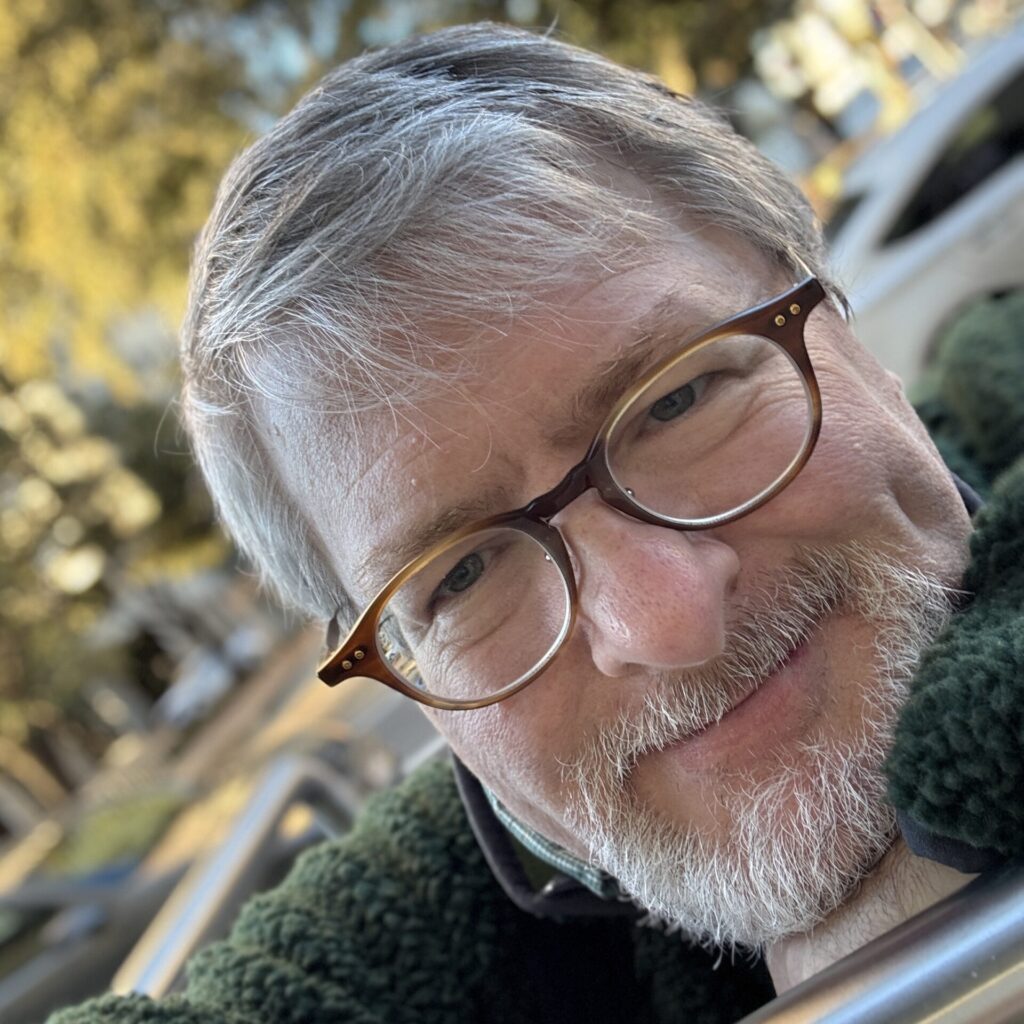
Together
is better
than alone.
– Todd Porter
Dear person who found my profile,
I’m glad we’re here together. I suspect that whatever brought you here holds the possibility of something extraordinary we could do together. I’m writing this in the hope that it will help you decide if I’m the right partner for whatever that is.
I think my favorite emotion is curiosity and it often leads me to ask my favorite question: What if…?
What if there’s more than enough of everything for everybody
What if we choose to live in interdependence instead of isolation?
What if the world is as it is because this is how we’ve made it?
What if we could make something different: a world where life flows freely?
The gravity of curiosity pulls me into even deeper questions like:
- What if every person I encounter experiences the same complex and conflicting emotions, thoughts, and experiences that I do?[1]
- What if the path to the “more beautiful world our hearts already know is possible”[2] begins with the realization that those I regard as strangers really are “parts of myself that I have not yet met”?[3]
I love thinking about these questions because they inspire me, energize me, and stir hope in me. That inspiration, energy, and hope draw me toward action that works to bring those possibilities into being.
I love Nonviolent Communication because it opens my heart to the possibility of a world where everyone thrives. I love NVC because it opens my heart to the people around me. I love it because it helps me connect to the network of life already flowing in my community. I love how engaging the world with nonviolence—with compassion—opens me up to others who can help me find answers to those “what if” questions that I’ll never discover by myself.
I first encountered Marshall Rosenberg’s work in 2012 as I faced a moment of truth in my life. Then, as now, I wished I had been more skilled in NVC than I was. Trying to use skills I had only just discovered, while simultaneously learning them, didn’t help me as much as I had hoped. The resulting disappointment sent me on a journey to practice NVC at every opportunity by inviting others to practice with me. I’m on an ongoing quest to meet each new moment of truth—each opportunity to show up as a whole person—better prepared than the last.
The deeper I went, the deeper I wanted to go.
At one of the Center for Nonviolent Communication’s (CNVC) International Intensive Trainings (IIT), I had the opportunity to spend a little over a week with CNVC Certified Trainers. I decided that whatever they did to embody NVC as they did, I wanted that. Thus began a new stage of my journey: seeking the integration and personal transformation of becoming a CNVC Certified Trainer.
Along the way, I’ve had the privilege of working with a wide range of communities learning and applying NVC:
- In a technical business environment, I’ve helped project managers engaging clients and colleagues with clarity and care.
- In a large public school maintenance department, I designed leadership training to help supervisors respond to service needs with compassion which produced more effective and satisfying outcomes.
- With church communities, I’ve supported both the welcoming of refugees and the grieving of meaningful transitions, helping people move forward together.
- With high school students from the U.S. and abroad, I’ve shared NVC as a way to engage one another’s stories while creating collaborative art.
- With community groups, I’ve facilitated conversations around charged political issues, exploring what becomes possible when people shift how they listen and speak.
- And with a global group of compassion advocates, I hosted a year-long NVC practice group disguised as a book club.
In each of these engagements, I designed an experience based on the needs of the community and the challenges they were facing. All of them included the basics of Nonviolent Communication and then provided an immediate opportunity to apply those skills to real, present challenges.
This is my preferred way to share NVC:
- design an experience informed by the challenges a specific group or community is facing,
- equip participants through with skill-building NVC practice,
- foster a posture of compassion connection,
- help students integrate knowledge, skill, and practice to create a “new normal” of connection within their network of relatships.
If that souns like the sort of thing your family, business, neighborhood, or faith community is hungry for, let’s get together and see what emerges. There’s a contact form below that you can use to start the conversation. That’s my offer: let’s talk!
I’ll close by admitting that it seems a little weird to me to write a professional profile/bio as a first-person letter to people I may not even know yet. I’m making this choice because I think it’s more authentic and more connective than all the “more professional” versions I’ve written. The thing I’d most like you to know about me is that I’m much more interested in connecting with you than I am in selling you on what a capable, accomplished, educated, experienced professional I am. (though I’m not opposed to you convincing yourself of that if you want to review my LinkedIn profile.)
Whatever format we choose, biographies are really just stories, and I’m writing this one because I’d like you to be part of it. Let’s follow our curiosity together and see how we might connect.
With hope and anticipation,
Todd Porter
[1] Koenig, John. (2021). Sonder. In Dictionary of Obscure Sorrows. Simon & Schuster. https://www.dictionaryofobscuresorrows.com/
[2] Eisenstein, C. (2022, March 17). The More Beautiful World Our Hearts Know Is Possible. https://charleseisenstein.org/books/the-more-beautiful-world-our-hearts-know-is-possible/
[3] Kaur, V. (2020). See No Stranger: A Memoir and Manifesto of Revolutionary Love. One World.